Cross-Industry Applications
Academic Research
A discovery engine for universities and research institutions across every scientific discipline.
One of 34 industries across 8 sectors served by ARDA — the research discovery engine.

The Challenge
Why Academic Research needs a new approach to discovery
Academic research spans every scientific discipline — physics, chemistry, biology, earth sciences, social sciences, engineering — where the common challenge is extracting governing laws and causal structures from experimental and observational data. Researchers across these fields generate datasets of increasing volume and complexity, from particle physics collision data to social survey time-series to geological field measurements. Yet the process of extracting governing equations and causal relationships from this data remains largely manual — researchers specify model families, fit parameters, test hypotheses sequentially, and iterate through theory-experiment cycles that can span years. The gap between data generation rates and scientific insight extraction rates continues to widen.
Current computational approaches in academic research fall into two camps that each leave significant gaps. Statistical modeling and hypothesis testing require researchers to pre-specify model structures, limiting discovery to variations within known theoretical frameworks. Machine learning achieves predictive performance but produces opaque models that do not advance scientific understanding — a neural network that predicts experimental outcomes does not constitute a scientific discovery in any discipline. Neither approach produces the typed, governed, reproducible scientific claims that academic publication and peer review demand. The reproducibility crisis across multiple scientific disciplines underscores the need for computational methods with built-in governance and provenance tracking.
The ARDA Approach
How ARDA transforms academic research
ARDA serves as a research discovery engine for academic institutions, ingesting experimental and observational data across disciplines and producing typed scientific claims — governing equations, causal graphs, conservation laws, regime classifications — that constitute genuine scientific discoveries rather than black-box predictions. Its discovery modes operate without requiring pre-specified model families, enabling researchers to discover governing laws they would not have hypothesized. ARDA bridges the gap between data collection and scientific insight, accelerating the theory-experiment cycle that drives academic research while maintaining the rigor that peer review and publication require.
ARDA's governance stack addresses the reproducibility crisis directly. Every discovery run produces an Evidence Ledger entry with a deterministic replay recipe — frozen random seeds, pinned library versions, hardware fingerprints, and input data hashes — enabling independent reproduction of every result. The Truth Dial Publish mode generates complete publish bundles suitable for supplementary materials in journal submissions. Negative controls — bootstrap stability, out-of-distribution testing, feature shuffle, time-reversal validation — provide the statistical rigor that peer reviewers demand. This governance infrastructure is not optional; it is embedded in every discovery run, ensuring that computational reproducibility is the default rather than the exception.

Discovery Engine
The engine behind the discovery
All four discovery modes serve academic research, with the appropriate mode depending on the discipline and data structure. Symbolic discovery is valuable across physics, chemistry, and engineering where closed-form governing equations represent the gold standard of scientific understanding. The Causal mode serves disciplines where causal inference from observational data is central — epidemiology, social science, ecology, economics. Neuro-Symbolic mode bridges disciplines where data complexity exceeds what symbolic regression alone can handle but interpretable governing laws remain the goal. Neural mode serves structural biology, materials science, and other disciplines where symmetry-respecting representations are essential.

Symbolic
Discovers closed-form governing equations — the explicit mathematical laws that describe how systems behave. Produces human-readable, interpretable formulas.

Neural
Deploys physics-informed architectures for high-dimensional, symmetry-rich data where closed-form solutions may not exist.
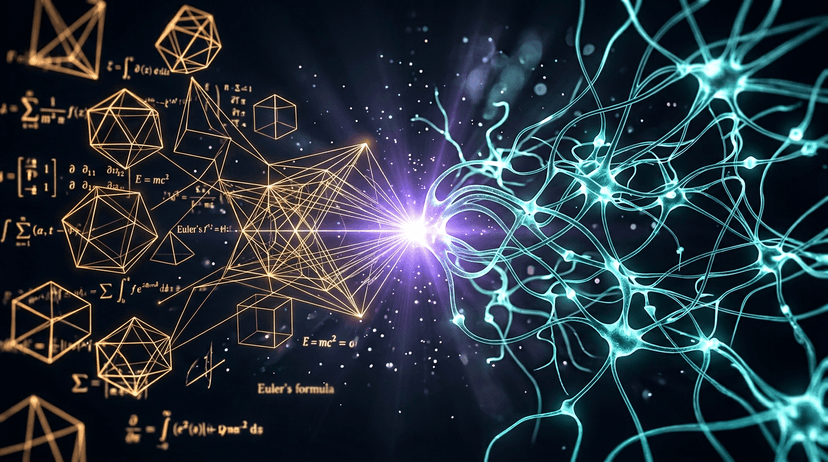
Neuro-Symbolic
Combines neural encoding with symbolic distillation — learns complex representations first, then extracts interpretable governing laws from those representations.
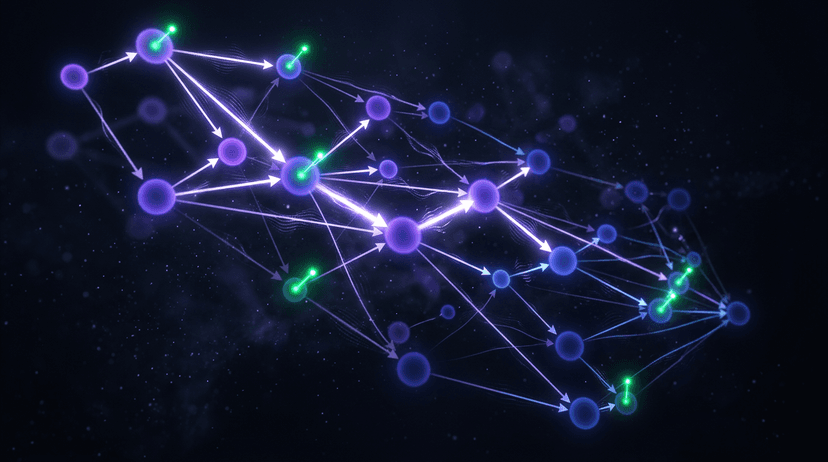
CDE
The Causal mode, powered by ARDA's Causal Dynamics Engine (CDE), discovers true cause-and-effect relationships from observational data — identifiable causal graphs, regime classifications, and intervention predictions.
Typed Scientific Claims
What ARDA discovers
Every discovery ARDA produces is a typed scientific claim — not a black-box prediction, but a governed, reproducible, auditable piece of scientific knowledge with full provenance.
- Governing equation discovery
- Causal structure identification
- Conservation law validation
- Regime classification
- Theory family comparison



Governed Discovery
Built for regulated industries
Every discovery ARDA produces carries governance metadata: a truth dial setting that controls the confidence threshold, an evidence ledger entry with deterministic replay recipe, and negative control results including bootstrap stability, out-of-distribution testing, and feature shuffle validation.
For academic research, this means every scientific claim is auditable, reproducible, and suitable for regulatory submission, peer review, or board-level decision-making. The governance stack is not optional — it is embedded in every discovery run.
Same sector
Related industries
Agriculture & Food Science
Discover crop growth dynamics, yield prediction laws, and soil-plant-atmosphere interaction equations.
ViewTelecommunications
Identify signal propagation laws, network traffic dynamics, and interference equations from measurement data.
ViewSupply Chain & Logistics
Discover governing dynamics of supply chain behavior — demand propagation, inventory oscillations, and disruption cascades.
ViewGet started
Start discovering with ARDA
Whether you are exploring academic research data for the first time or scaling an existing research programme, ARDA adapts to your workflow. Create an account, connect your data, and let the engine surface the governing laws hidden in your experiments.