Climate & Environment
Environmental Monitoring
Discover causal dynamics governing pollution transport and ecosystem response from multi-sensor monitoring networks.
One of 34 industries across 8 sectors served by ARDA — the research discovery engine.

The Challenge
Why Environmental Monitoring needs a new approach to discovery
Environmental monitoring networks generate continuous multi-sensor data — air quality stations measuring particulate matter, ozone, and nitrogen dioxide; water quality sensors tracking pH, dissolved oxygen, and contaminant concentrations; soil sensors; satellite-derived land cover and vegetation indices. These data streams capture the state of environmental systems, but extracting the governing dynamics — pollution transport pathways, degradation kinetics, ecosystem response functions — requires separating anthropogenic signals from natural variability across spatially distributed, temporally irregular, and instrumentally heterogeneous measurement networks.
Conventional environmental analysis relies on dispersion models with assumed source terms, receptor models with fixed source profiles, or statistical trend analysis that captures correlations without causal structure. These approaches struggle with the complexity of real environmental systems where multiple pollution sources interact, atmospheric and hydrological transport pathways overlap, and ecosystem responses involve nonlinear thresholds and delayed effects. Regulatory decision-making requires causal attribution — identifying which sources drive observed environmental degradation — but standard statistical methods cannot reliably distinguish causation from correlation in observational environmental data.
The ARDA Approach
How ARDA transforms environmental monitoring
ARDA ingests multi-sensor environmental monitoring data — pollutant concentrations, meteorological variables, hydrological measurements, ecological indicators — and produces typed scientific claims about the governing dynamics of environmental systems. Its discovery modes identify pollution transport equations, degradation kinetics, and ecosystem response laws without pre-specified model structures. ARDA separates signal from noise across heterogeneous monitoring networks, handling the irregular spatial coverage and varying temporal resolution characteristic of real-world environmental data, and producing governing equations that capture the actual dynamics rather than idealized approximations.
ARDA's Causal mode is particularly valuable for environmental monitoring, producing causal graphs that identify the true drivers of environmental change and separate natural variability from anthropogenic effects. This causal attribution capability directly supports regulatory decision-making, where establishing source-impact relationships is essential for enforcement and remediation planning. The governance stack ensures that every environmental claim is reproducible and auditable: the Evidence Ledger records full data provenance and discovery configuration, while negative controls validate that identified causal relationships are robust to temporal resampling and spatial subsampling.
Discovery Engine
The engine behind the discovery
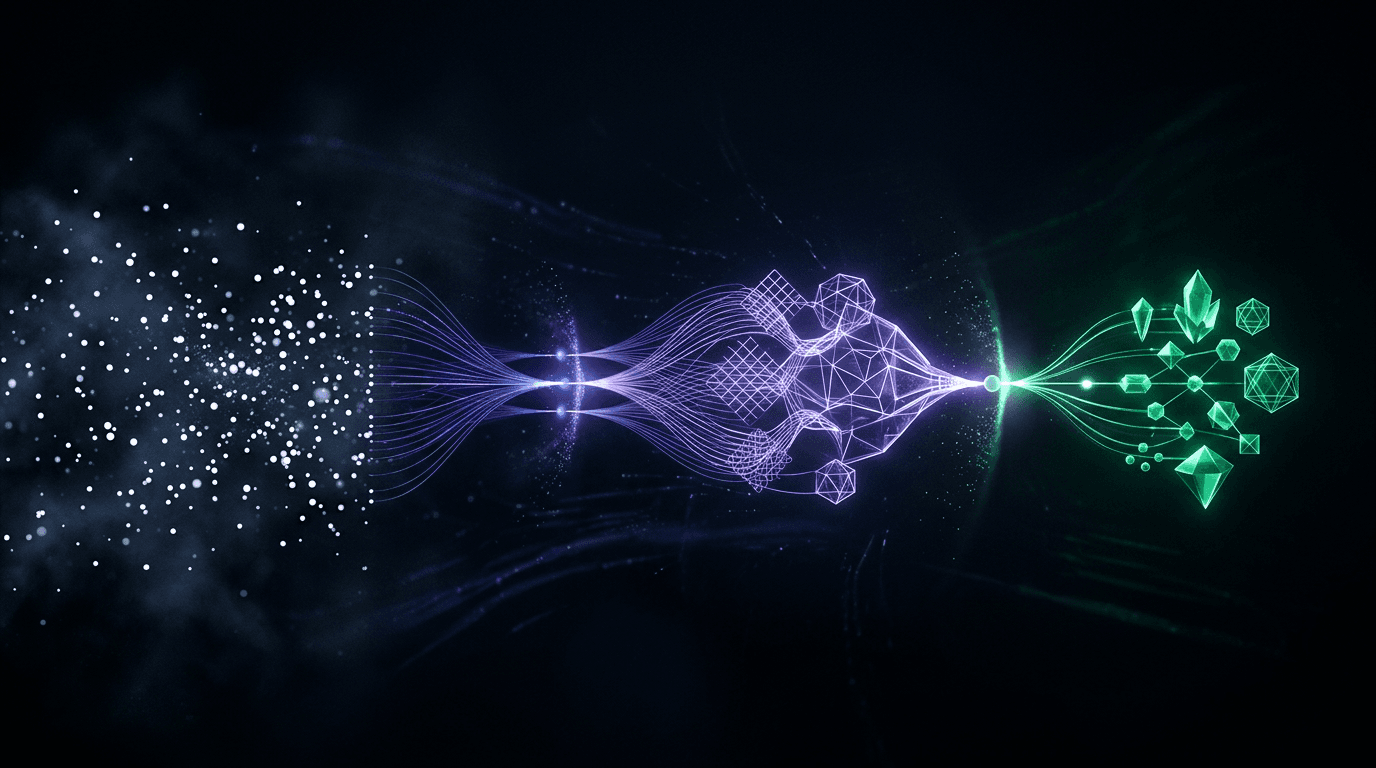
Causal mode is the primary mode for environmental monitoring, mapping causal pathways from emission sources through transport processes to receptor impacts and ecosystem responses. Its causal graphs provide the source attribution evidence that regulatory agencies require. The Symbolic mode discovers closed-form transport equations and degradation kinetics from monitoring time-series. The Neuro-Symbolic mode handles the high-dimensional, multi-sensor structure of modern monitoring networks, with neural encoders integrating heterogeneous data streams and symbolic distillation extracting interpretable environmental dynamics laws suitable for regulatory modeling and compliance assessment.

Symbolic
Discovers closed-form governing equations — the explicit mathematical laws that describe how systems behave. Produces human-readable, interpretable formulas.

Neural
Deploys physics-informed architectures for high-dimensional, symmetry-rich data where closed-form solutions may not exist.
Neuro-Symbolic
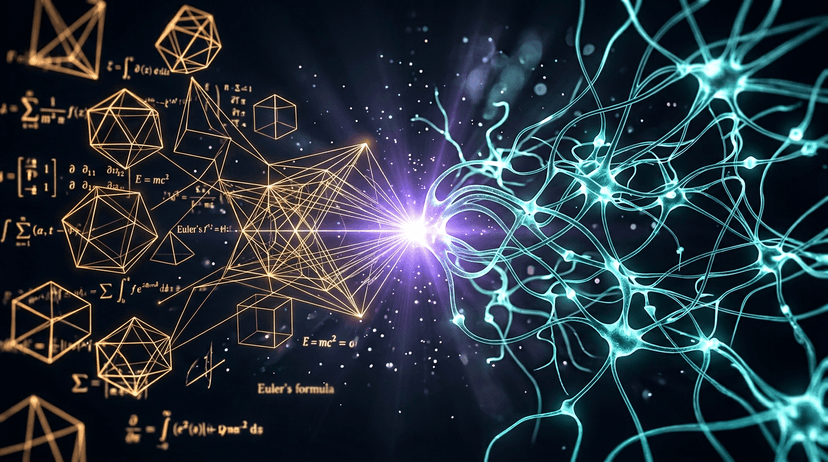
Combines neural encoding with symbolic distillation — learns complex representations first, then extracts interpretable governing laws from those representations.
CDE
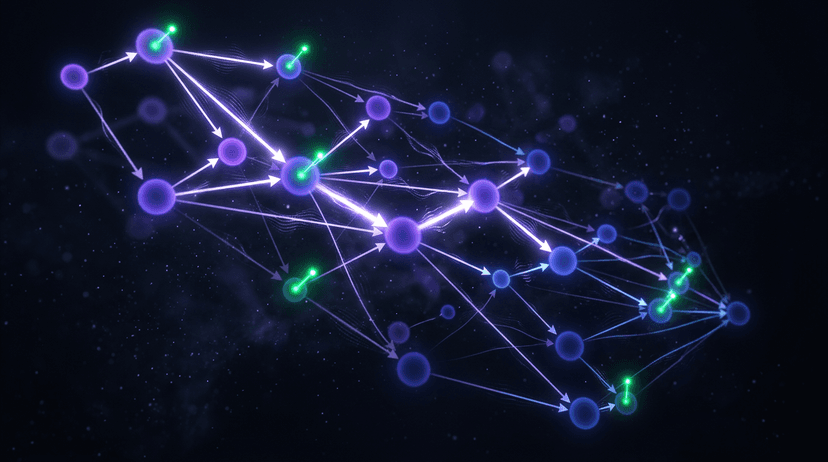
The Causal mode, powered by ARDA's Causal Dynamics Engine (CDE), discovers true cause-and-effect relationships from observational data — identifiable causal graphs, regime classifications, and intervention predictions.
Typed Scientific Claims
What ARDA discovers
Every discovery ARDA produces is a typed scientific claim — not a black-box prediction, but a governed, reproducible, auditable piece of scientific knowledge with full provenance.
- Pollution transport equations
- Ecosystem response dynamics
- Environmental degradation laws
- Source attribution causal models
- Remediation kinetics



Governed Discovery
Built for regulated industries
Every discovery ARDA produces carries governance metadata: a truth dial setting that controls the confidence threshold, an evidence ledger entry with deterministic replay recipe, and negative control results including bootstrap stability, out-of-distribution testing, and feature shuffle validation.
For environmental monitoring, this means every scientific claim is auditable, reproducible, and suitable for regulatory submission, peer review, or board-level decision-making. The governance stack is not optional — it is embedded in every discovery run.
Same sector
Related industries
Climate Science
Discover governing equations of climate dynamics — energy balance laws, circulation patterns, and feedback mechanisms.
ViewOceanography
Identify ocean circulation laws, wave dynamics, and thermohaline governing relationships from oceanographic data.
ViewEcology & Conservation
Identify population dynamics laws, predator-prey equations, and ecosystem stability conditions from ecological survey data.
ViewGet started
Start discovering with ARDA
Whether you are exploring environmental monitoring data for the first time or scaling an existing research programme, ARDA adapts to your workflow. Create an account, connect your data, and let the engine surface the governing laws hidden in your experiments.