Advanced Technology
Quantum Computing Research
Discover decoherence dynamics, gate error laws, and qubit interaction equations from quantum hardware characterization data.
One of 34 industries across 8 sectors served by ARDA — the research discovery engine.
The Challenge
Why Quantum Computing Research needs a new approach to discovery
Quantum computing hardware characterization produces data with unique physical structure — qubit coherence decay curves, gate fidelity measurements, cross-talk matrices, error syndrome distributions — where the governing quantum dynamics determine system capability, error rates, and computational fidelity. These datasets grow rapidly as processor scale increases, with error mechanisms that compound across qubit arrays in ways that resist characterization by conventional statistical methods. Research teams face the fundamental challenge of extracting coherent physical models from noisy quantum measurements where decoherence, leakage, and cross-talk create interacting error sources that are difficult to disentangle.
Standard approaches to quantum hardware characterization rely on randomized benchmarking, quantum process tomography, and gate set tomography — techniques that provide aggregate performance metrics but struggle to identify the underlying physical mechanisms driving errors. These methods typically assume specific noise models and cannot discover previously unknown error dynamics or interaction pathways. As quantum processors scale beyond small qubit counts, the combinatorial growth of potential error correlations makes exhaustive characterization impractical. The field lacks systematic methods for discovering the governing equations of error dynamics directly from hardware data, forcing teams to iterate through hypothesized noise models manually.
The ARDA Approach
How ARDA transforms quantum computing research
ARDA ingests raw quantum characterization data — coherence measurements, randomized benchmarking sequences, cross-talk characterization sweeps — and discovers the governing equations of error dynamics without requiring pre-specified noise models. By treating quantum hardware data as a discovery problem rather than a fitting problem, ARDA identifies error mechanisms and interaction pathways that conventional characterization protocols overlook. Each discovered relationship is produced as a typed scientific claim with confidence bounds and falsification test results, providing quantum hardware teams with validated physical models of their specific processor's error dynamics rather than generic noise assumptions.
ARDA's physics-informed neural architectures model the unitary and dissipative dynamics of quantum systems simultaneously, capturing the interplay between coherent evolution and decoherence processes that defines qubit behavior. The symbolic discovery mode extracts closed-form decoherence equations and error scaling models that researchers can validate against theoretical predictions and use to project performance at larger qubit counts. ARDA's governance stack provides deterministic replay and evidence ledger provenance for every discovered error model, enabling teams to track how error dynamics evolve across hardware revisions and calibration cycles with full auditability and reproducibility.
Discovery Engine
The engine behind the discovery
The Causal mode is especially relevant for quantum computing research, where understanding causal pathways of error propagation across qubit arrays is essential for developing targeted error mitigation strategies. Causal mode produces causal graphs that map how errors in one qubit affect neighboring qubits through cross-talk, spectator effects, and correlated noise channels — enabling hardware teams to prioritize which error sources to address first. The Neuro-Symbolic mode complements this by discovering the governing equations of decoherence dynamics, combining neural encoding of complex quantum measurement data with symbolic distillation to produce interpretable physical models of processor behavior.
Symbolic
Discovers closed-form governing equations — the explicit mathematical laws that describe how systems behave. Produces human-readable, interpretable formulas.
Neural
Deploys physics-informed architectures for high-dimensional, symmetry-rich data where closed-form solutions may not exist.
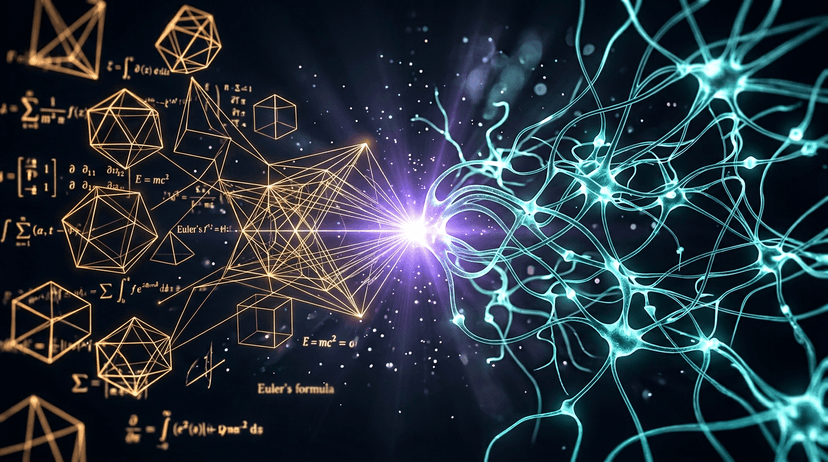
Neuro-Symbolic
Combines neural encoding with symbolic distillation — learns complex representations first, then extracts interpretable governing laws from those representations.
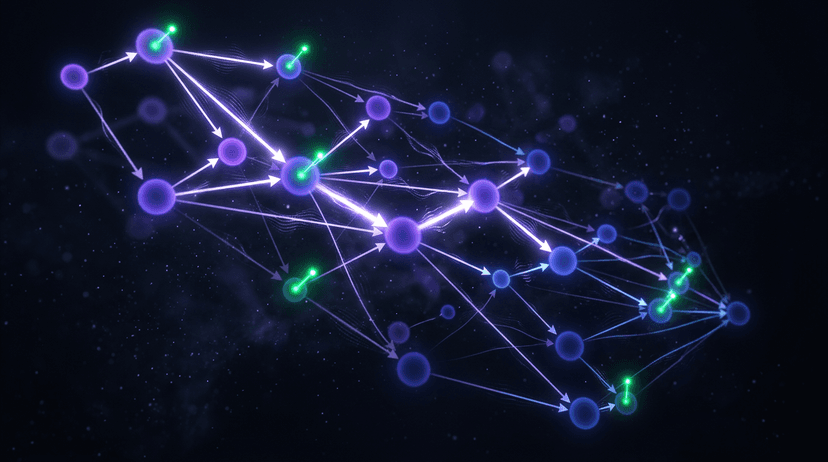
CDE
The Causal mode, powered by ARDA's Causal Dynamics Engine (CDE), discovers true cause-and-effect relationships from observational data — identifiable causal graphs, regime classifications, and intervention predictions.
Typed Scientific Claims
What ARDA discovers
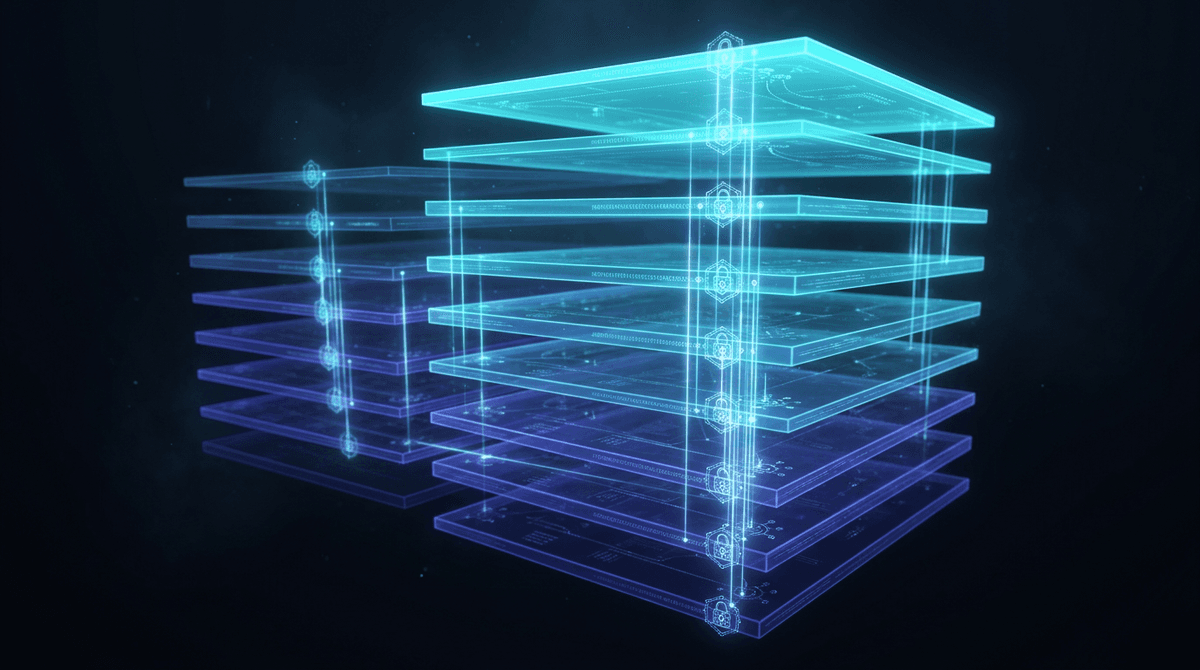
Every discovery ARDA produces is a typed scientific claim — not a black-box prediction, but a governed, reproducible, auditable piece of scientific knowledge with full provenance.
- Decoherence dynamics equations
- Gate error scaling laws
- Cross-talk interaction models
- Error propagation causal graphs
- Qubit coupling dynamics

Governed Discovery
Built for regulated industries
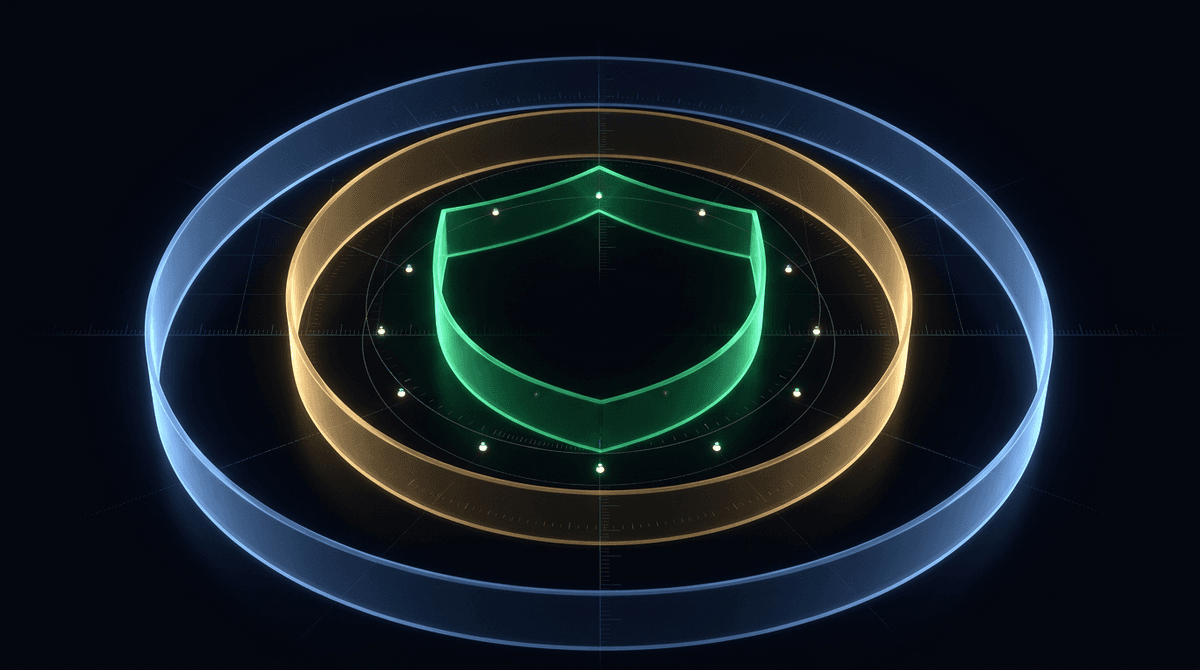
Every discovery ARDA produces carries governance metadata: a truth dial setting that controls the confidence threshold, an evidence ledger entry with deterministic replay recipe, and negative control results including bootstrap stability, out-of-distribution testing, and feature shuffle validation.
For quantum computing research, this means every scientific claim is auditable, reproducible, and suitable for regulatory submission, peer review, or board-level decision-making. The governance stack is not optional — it is embedded in every discovery run.
Same sector
Related industries
Semiconductor & Electronics
Discover physical laws governing semiconductor device behavior — switching dynamics, thermal dissipation, and process optimization equations.
ViewRobotics & Autonomous Systems
Identify governing dynamics of robotic systems — kinematic laws, control equations, and environmental interaction models.
ViewAI & Machine Learning Research
Discover governing dynamics of training processes — loss landscapes, optimization trajectories, and scaling laws.
ViewGet started
Start discovering with ARDA
Whether you are exploring quantum computing research data for the first time or scaling an existing research programme, ARDA adapts to your workflow. Create an account, connect your data, and let the engine surface the governing laws hidden in your experiments.